
Frequently Asked Questions About Credit Card Processing in Elizabeth, New Jersey
What do I need to start accepting credit card payments for my business in Elizabeth, NJ?
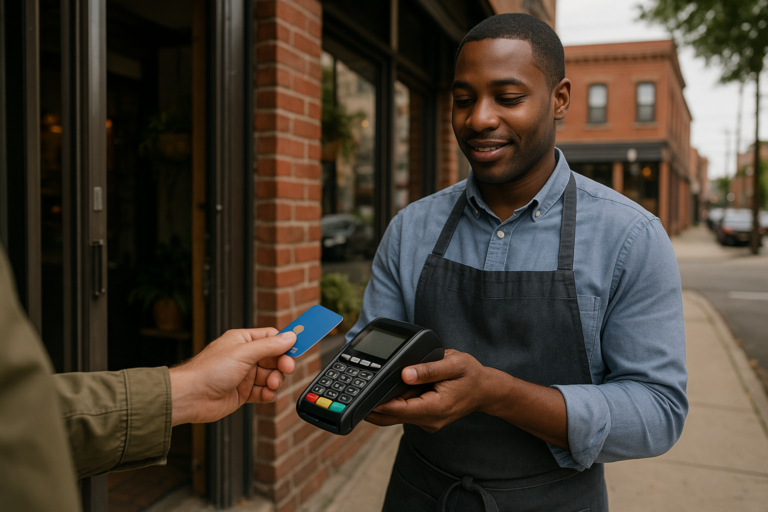
To begin accepting credit cards, you’ll typically need a merchant account (or an all-in-one payment platform), a way to process transactions (card reader, terminal, or online checkout), and a payment method connected to your bank. We can help you understand what hardware or software fits your workflow—whether you swipe/tap in person or take payments online. It’s also important to prepare for basic setup steps like choosing funding accounts and configuring receipts.
What’s the difference between card-present and card-not-present processing?
Card-present processing happens when the customer uses the card at your location—such as swiping, inserting (chip), or tapping (contactless). Card-not-present processing is for online, phone, or invoiced payments where the card isn’t physically present. Because risk and fraud controls differ, providers may use different security requirements and pricing structures for each. Choosing correctly helps you avoid processing issues and ensures transactions are handled the way your customers pay.
How do chargebacks work, and how can I reduce them?
A chargeback occurs when a customer disputes a transaction and the payment network requires the merchant to provide evidence. Common causes include billing disputes, processing errors, or unclear purchase terms. To reduce risk, keep transaction records, confirm accurate descriptions on receipts/invoices, and use consistent customer communication. If a dispute arises, responding with complete documentation—such as proof of delivery for services/products—can help. A qualified provider can also guide best practices for your transaction types.
Can I accept payments both in-store and online using one setup?
Many businesses can manage both in-store and online payments through a unified payment solution, but the exact setup depends on your tools. In person usually involves card readers or terminals, while online requires a checkout integration or invoicing system. A consolidated approach can simplify reporting and reconciliation, since deposits and transaction data may be managed in one place. When planning your system, consider how you want orders tracked, how refunds are issued, and whether your online process supports secure checkout.
What security and compliance should I expect with credit card processing?
Credit card security typically includes requirements aligned with industry standards, such as protecting card data and using secure methods for processing payments. The right provider should help you understand how data is handled—especially if you collect card numbers yourself versus using hosted checkout or tokenization. Look for features like encryption, secure authentication options, and clear guidance on handling refunds and voids. If your business uses terminals or online forms, follow provider recommendations to reduce exposure.