
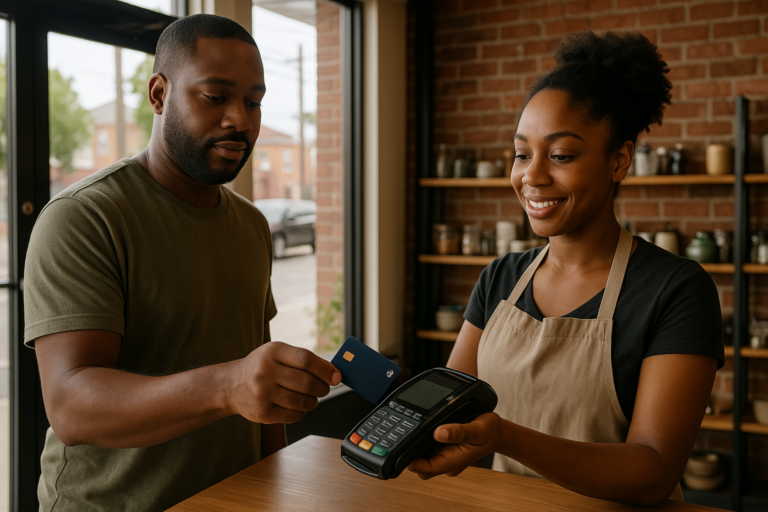
Frequently Asked Questions About Credit Card Processing in Roosevelt, New York
What do I need to start accepting credit card payments for my business in Roosevelt, NY?
To start accepting credit cards, you typically need a payment processing setup and a merchant account or payment service provider that supports card-present and/or card-not-present transactions. Have your business details ready (legal business name, tax information, and ownership details) and decide where payments will happen—at a counter, through an online store, or via invoices. You’ll also want to choose the right hardware, like chip readers and contactless terminals, based on how customers pay.
Can you process both in-person and online credit card transactions?
Yes, many businesses use processing solutions that handle both in-person and online payments. In-person typically uses card readers (chip and contactless) connected to a terminal or POS system. Online processing can integrate with an e-commerce platform or a hosted checkout page. It’s important to confirm whether your setup supports card-not-present payments securely, including tokenization and fraud checks, and whether the same merchant credentials can be used across channels.
What fees should I expect for credit card processing?
Credit card processing costs usually come from a few categories: card network and interchange fees, payment processor fees, and possible fees for equipment, chargebacks, or monthly service. The exact amounts depend on factors like card type, transaction method (in-person vs. online), and your industry. When reviewing an agreement, ask for a clear fee schedule and an explanation of how statements are calculated so you can estimate your total cost per transaction for your typical sales mix.
How are chargebacks handled, and what can I do to reduce them?
Chargebacks occur when a cardholder disputes a transaction. The best approach is prevention: use clear receipts, accurate billing descriptors, and strong customer verification for online orders. For in-person sales, ensure the correct transaction type (chip/contactless) and keep documentation when possible. If a dispute is filed, the merchant usually must respond with supporting evidence. A solid process for tracking orders, refunds, and communications helps reduce repeat issues.
How do I keep customer payment data secure when processing credit cards?
Payment security is crucial. A reliable processor will use security measures designed for credit card transactions, such as encryption and tokenization, so sensitive card data isn’t unnecessarily exposed. To stay compliant, avoid manually storing card numbers and follow the rules for your hardware and systems. If you use a POS, keep software updated and restrict access to accounts used for processing. For online payments, using secure checkout integrations helps reduce risk for you and your customers.