
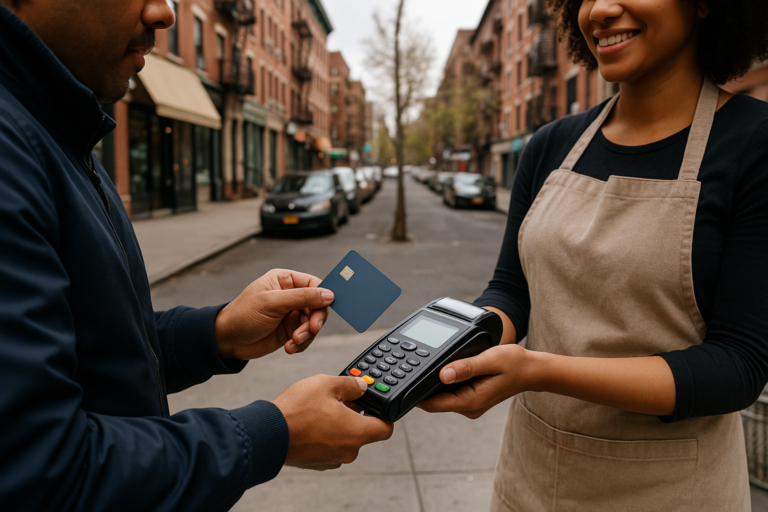
Frequently Asked Questions About Credit Card Processing in Washington Heights, New York
What do I need to start accepting credit card payments as a small business?
To begin accepting credit cards, you’ll typically need a merchant account or an account with a credit card processing provider, a payment terminal or online checkout setup, and a secure way to handle card data. Many businesses also need basic setup details like your business name, contact information, and banking information for deposits. If you’re in Washington Heights, you can choose a solution that fits your workflow—counter service, mobile payments, or e-commerce—without changing how you run your day-to-day operations.
What types of credit card processing are available for local businesses?
Credit card processing options usually fall into a few categories: in-person terminal payments (swipe, dip, tap), mobile payments for on-the-go sales, and online payments for websites or invoices. Some providers also support recurring billing for subscriptions, and invoicing tools for businesses that bill customers after service. The best choice depends on how you sell—walk-in, delivery, or online—and whether you need features like customer receipts, card-on-file, or integrations with common bookkeeping tools.
How are credit card processing fees typically structured?
Processing fees commonly include several components, such as interchange (set by card networks), assessment or network charges, and the payment processor’s service fees. Some providers present a straightforward “flat rate” while others use interchange-plus pricing. It’s important to ask how your effective rate will be calculated and whether there are additional costs for equipment, chargebacks, or monthly account fees. Reviewing your statement line by line helps you understand what drives costs for your typical ticket size and volume.
How can I reduce chargebacks and payment disputes?
Chargebacks often happen when cardholders report problems or when transaction details don’t match what the customer expected. To reduce disputes, use clear descriptions on receipts and invoices, provide timely delivery or service updates, and keep documentation such as proof of authorization or signed agreements when applicable. If you process online, ensure checkout information is accurate and that customers can easily review totals and policies. Training staff on refunds, exchanges, and correct transaction handling also helps prevent avoidable reversals.
What security steps should I expect for credit card data protection?
When processing cards, security is critical. Look for systems that use end-to-end encryption, tokenization (so raw card numbers aren’t stored), and secure methods for handling card entry. Many solutions are designed to reduce your direct exposure to sensitive card data by using compliant payment terminals and gateways. Ask how transactions are transmitted, stored, and accessed internally. For peace of mind, confirm that the workflow supports PCI-aligned handling practices, especially if you accept payments in-person and online.