
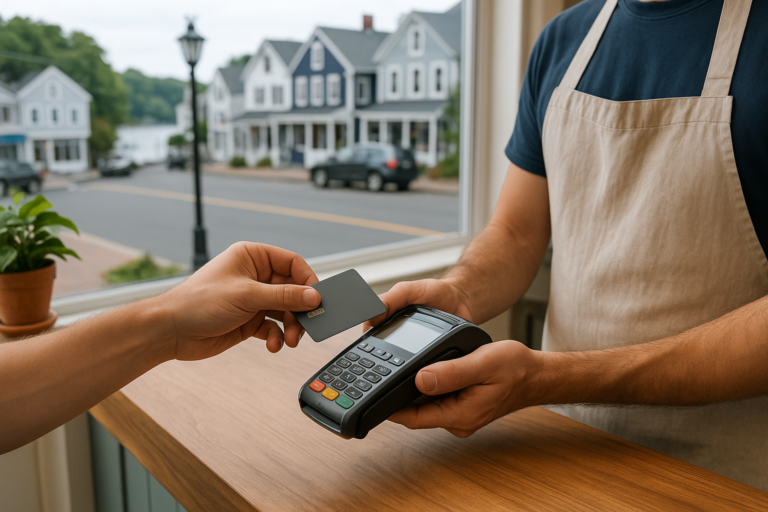
Frequently Asked Questions About Credit Card Processing in Saugatuck, Connecticut
What do I need to start accepting credit card payments for my business in Saugatuck?
To accept credit cards, you’ll typically need a payment processing setup that includes a merchant account and a way for customers to pay—such as a card terminal, mobile card reader, or eCommerce checkout. Gather basic business details (legal business name, tax information, and ownership information) and know how you’ll take payments (in-person, online, or both). If you’re upgrading an existing system, have current equipment and current processor details ready for comparison.
What’s the difference between a merchant account, a payment gateway, and a card reader?
A merchant account is the account that enables your business to receive card payments. A payment gateway is the technology that securely routes and authorizes transactions, especially for online payments. A card reader or terminal is the hardware customers use at checkout for in-person transactions (tap, dip, or swipe). Some providers bundle these components, while others handle them separately—so it helps to clarify what’s included before you choose a setup.
How do credit card processing fees usually work?
Credit card processing fees commonly include multiple components, such as transaction charges, network fees, and sometimes monthly or statement fees. Rates may be presented as a flat-rate percentage, interchange-plus, or tiered structures—each affects the total cost differently depending on your average ticket size and how often you process. Ask for a written fee schedule and sample calculations. Also confirm whether discounts or surcharges apply to your payment method mix.
What security steps should I expect when processing customer payments?
Reliable credit card processing should prioritize secure handling of card data. Look for solutions that use encryption for data in transit and tokenization or other methods to reduce exposure of sensitive information. Your terminal or software should support current payment standards (for example, EMV chip acceptance and secure communication). It’s also important to follow best practices—like not storing full card numbers and limiting access to payment systems—to reduce risk and improve compliance.
Can I accept payments both in-store and online without changing systems?
Many businesses want one setup that supports both in-person and online payments. Some processors offer unified platforms where you can use a compatible terminal for card-present transactions and integrate a payment gateway for your website. To avoid surprises, confirm compatibility with your online checkout method (shopping cart, invoicing, or payment links) and whether reporting and reconciliation are centralized. Ask how refunds and chargebacks are handled across both channels so your process stays consistent.